

-
!Xaus Lodge
Five star lodge inside the Kgalagadi Transfrontier Park.
-
Ambiguity is my middle name: A research diary
The story of Sarah Bartmann teaches nothing if it does not teach you who you are. Researching her life and talking to people about her I found out that I would remain a brown woman, no matter how many strings of degrees I trailed around behind my name. My race and my gender followed me, even into my academic work. Simply put, my experiences of being black and a woman writing about Sarah Bartmann have proved to be germane to a study of her historiography. Thus, this chapter deals with my relationship with the academic world of knowledge surrounding the Sarah Bartmann story. In the first half of the essay I deconstruct the uses and abuses of Sarah Bartmann in current academic discourse. I then move on to a discussion of my experience teaching this material in racially mixed settings at the University of Cape Town (UCT). The chapter ends with a discussion of my quest for self-understanding and self-retrieval from the obscurities of a language not created for my benefit. My intention is to produce a turn-around polemic against the racist and sexist cultural texts that silenced me through their animosity, and thus contribute towards the communal project of creating a more hospitable mental environment for African creativity. It expresses my human need to understand, come to terms with, and move on from, the dominant Bartmann historiography.
-
Thank you for making me strong: Sexuality, gender, and environmental spirituality
The article seeks to situate issues of sexuality and gender orientation in an ecological perspective. It is well known that most plant species are not two-gendered, although a few trees are like the human species: male, female and intersex. Some animal species, such as snails, are fully intersex. Moreover, over 450 animal species has been observed exhibiting homosexual behaviour. Yet only one species has been observed to exhibit homophobia. As such, what requires explaining is why the human species is so ill at ease with what is a perfectly normal variation which can be observed throughout nature. This paper locates species diversity in a in a pan-Africanist discourse which argues that the true cultural import is homophobia.
-
Back to our roots: Principles of uncertainty as applied to monitoring and evaluation for gender and climate change work
In deconstructing the notion of human beings as living ‘outside’ nature, Glazebrook tells the following story: “Humans are animals, and embodiment entails natural processes. At a recent conference, a speaker who urged the audience to ‘get back to nature’ was quickly challenged: when had he left? He had been seen eating breakfast.” Climate change is a big reminder of this reality. Thinking of ourselves as outside nature allowed us to not take notice of where our waste went, or to see how limited the ability of the atmosphere to absorb greenhouse gases was, and global warming is important in reminding us that in fact we never left. Unfortunately, it takes time for our dominant knowledge systems to catch up with that reality. The assumption that we can abstract from nature sufficiently to pursue a neat and tidy experimental method still underlies much development work. However, with climate change, we are increasingly being forced to accept that such an approach is not useful. Instead we are better off conceding the principle of uncertainty: not only can we not know everything we need to know, we also will never be sure quite how much we do not know. Throughout this essay, I will be using food supply as a practical example, since it is not only a deeply gendered process, but also a timely reminder of the fact that we never left nature behind. This essay looks at how to apply the principle of uncertainty to monitoring and evaluation (M&E) of gender and climate change work. It is necessary to pay analytical attention to this problem, since M&E of climate change adaptation is widely agreed to be different from previous development work. It has been observed that best way to approach the issue is to negotiate principles of M&E in the initial stage of project planning. However, so far it has not been possible to do this for the simple reason that the first few projects did not know what to expect. Now, however, we are in a better position to begin to develop a gender-specific methodology for climate change adaptation. This will come in handy for people planning future projects.
-

Khoelife
-

Thicker than Sorrow: A book launch
In this much anticipated second collection Khadija Heeger focuses on appreciating and honouring her roots and unearthing her history
-
Reflections by Khadija Heeger: An interview
This interview is a follow up to the book launch of Thicker than Sorrow.
-

History of the San & Khoi Centre: An interview with June Bam-Hutchison
In this interview Professor June Bam-Hutchison shares the history of the Centre. She describes its ties to the Centre of African Studies (CAS), the A/Xarra Restorative Justice Forum, and the wider community of indigenous people. She further pays tribute to the various role players contributing to the establishment and work of the Centre.
-
Ouma Katrina: Day 3 interview
-

Post presentation discussion: Status of teaching of African women history in African universities
-
Oral history of the Two Rivers
-

Making history, writing the present: The WCCR and Black Feminism at UCT
-
Supplementary Archival Project
This project is the work of the Knowledge Management Team. It aims to provide supplementary information to the work of the various research teams within the Centre. Due to the nature of the team's work they can spot gaps in the content being curated for the archive. Where possible the team has undertaken to generate archival information in order to provide a more comprehensive knowledgebase.
-

The interment of Sarah Baartman
Alicia Monis addresses Sarah Baartman’s interment process. She acknowledges that Sarah Baartman was never buried by the French as her remains were kept as museum items. So, technically she was not reburied in South Africa after the repatriation of her remains. Alicia briefly discusses the process undertaken to have Sarah Baartman’s returned home. Part of this discussion entailed reading an extract of the special French legislation drafted to enable their release of Sarah Baartman.
-
Social engineering the destruction of social hybridity in the Cape
-

Re-thinking Africa: Indigenous Women Re-interpret Southern Africa's Pasts: A book launch
The book "Re-thinking Africa: Indigenous Women Re-interpret Southern Africa's Pasts" Edited by Bernedette Muthien and June Bam was announced on the 26th of January 2021 to celebrate the completion of the book. The book is a compilation of essays and poems by indigenous women from southern Africa. The launch was hosted by the Khoi and San Unit situated in the Centre for African Studies.
-
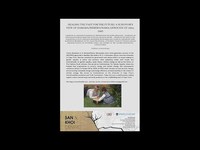
Healing the past for the future: A survivor's view of the Damara/Herero/Nama genocide of 1904-1905
A seminar in honour of Women’s Day presented by Dr Yvette Abrahams. Chaired by Dr June Bam Hutchison Director of the San and Khoi Centre. Opened by the Dean of the Humanities Faculty Associate Professor Shose Kessi and closed by Paramount Chief Marthinus Fredericks, of the !Aman Traditional Authority/ Chair of the Khoi and San Kingdom Council of southern Africa and member of the A/Xarra Restorative Justice Forum. Yvette Abrahams is of Damara/Herero descendant and a third-generation survivor of the1904/1905 genocide in Namibia.
-

Jeanefer Visser-Stallenberg
Jeanefer is a graduate of the 2021/2022 Foundational Khoekhoegowab Language Course offered by the Centre. In 2023 she was selected to participate in the Centre's Khoekhoegowab Teacher Training Internship programme where she participated in a language proficiency course with teacher and training development opportunities. As part of this programme, Jeanefer co-facilitated two of the Foundational Khoekhoegowab Courses offered by the Centre under the supervision of Pedro Dausab.
-
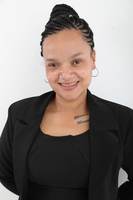
Terneil Obermeyer
Terneil is a graduate of the 2019 Foundational Khoekhoegowab Language Course offered by the Centre. In 2023 she was selected to participate in the Centre's Khoekhoegowab Teacher Training Internship programme where she participated in a language proficiency course with teacher and training development opportunities. As part of this programme Terneil co-facilitated two of the Foundational Khoekhoegowab Courses offered by the Centre under the supervision of Pedro Dausab.
-
Pedro Dausab speaks Khoekhoegowab: Reflecting on his formative years and his educational journey
Pedro Dausab relates the reason why he only started schooling at the age of eleven. He discusses having to navigate learning in both the English and Afrikaans mediums. He describes how he excelled at school despite of these challenges and how he progressed to studying at tertairy institutions. Pedro's success is contrasted to the educational reality of children of Nama, Damara and Herero ancestry being taught by unqualified teachers in Church schools as they had no formal schools dedicated to their education. In between this narrative we can also learn about Pedro's grandfather and father and their influence in his life.
-
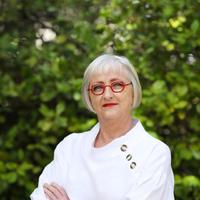
Medee Rall
-
A/Xarra Women's Commission
-
Forty (40) Training Workshops
The research team of the conceptual and methodological research phase of the Endangered Languages Preservation project engaged in these 40 workshops from 2020 to 2022 to produce this digital platform. The training programme was provided under the research supervision and directorship of June Bam-Hutchison. Technical digital curation research training was provided by computational linguist Martin Gluckman. The training programme included the transition from a colonial to decolonial knowledge paradigm; the complexities of working within a community whose historical legacy includes genocide, epsticide and linguicide; and the use of digital tools to leverage indigenous knowledge, languages, and scholarship to be as competitive in the knowledge arena as the mainstream knowledge system of the western world. Subject specialists were invited to periodic sessions to learn more about the project and to contribute of their expertise to the programme.
-
!Gâ re – Rangatiratanga – Dadirri : Decolonizing the ‘capture of knowledge': 2019 - 2022
June Bam-Hutchison was the primary investigator of this international research project. The project aimed to establish a Global Research Network for Indigenous Knowledge Restoration with global indigenous scholars tackling the challenge of cultural understanding of indigenous knowledge, languages and cultural practices and addressing their marginalisation through the development of a co-designed digital archive. It aimed to provide a strong platform from which comparative research in indigenous knowledge restoration – which has thus far been limited to isolated pockets of research – can take place.
-

Decolonisation of Knowledge Production in Comparative Perspective (South Africa and Brazil): Dialogical Archives Seminar Series
Community and research members of the San & Khoi Centre benefitted from participating in the BRICS NIHSS funded Dialogical Archives Seminar Series. The primary project researchers were June Bam-Hutchison and Danilo Streck. Participation was open to post-graduate students and community activists from Brazil and South Africa. An international lineup of global south scholars contributed to the programme by sharing how their work contributes to the decolonisation of knowledge. The outcome of the seminar series was to develop a conceptualisation of "dialogical archives" as informed by the work of among others Paulo Freire. The seminar series is credited for informing the dialogical nature of the curatorial narrative of this archive and its capacity to develop inclusivity of diversity.
-
Affiliated Project Work
The scholarship of primary researchers associated with the San & Khoi Centre can afford its members to participate in projects not initiated by the Centre. Such projects are clustered here.
-
Restoring African Feminist Indigenous Knowledge in the Southern African Human Languages Technologies project: An action research case study of the San tsî Khoen Digital Archive 2020-2022
The United Nations declared 2019 the International Year of Indigenous Languages for the promotion of language development, peace, and reconciliation. One of the stated aims of the awareness campaign is the integration of indigenous languages into standard settings, bringing about empowerment through capacity building and through the elaboration of new knowledge. The San tsî Khoen Digital Languages Application & Archive is a project based in the San & Khoi Centre at the University of Cape Town (UCT). Established in 2020 and funded by the Department of Sports, Arts and Culture, it is informed by a co-design digital curation process with the community. The project archives the endangered and erased languages of the indigenous San and Khoi communities of southern Africa, with an initial focus on N|uu and Khoekhoegowab. To obtain this, the project integrates decolonial scholarship within a digital environment of human languages technologies that creates a visibility of not only erased and endangered languages but also indigenous African feminist knowledges that have been lacking in scholarship. The digital archive hopes to provide support for the case for these languages to become South African official languages. With this purpose in mind, its co-design digital curation process challenges the insular and fragmented nature of academic output, thereby allowing for a greater degree of critical analysis. This action research and digital curation process is not without its challenges, as co-creating knowledge in an attempted decolonial framework that aims to foreground African indigenous feminist knowledge (such as that of last fluent Nluu speaker, Ouma Katrina Esau) in a region of historical linguicide that was subjected to epistemic violence, as a consequence of colonialism and neo-colonialism, is in itself not without its various contestations. This paper critically discusses this collaborative research and co-design knowledge production process engaged with over a process of forty research workshops, over the past two years. The analysis and discussion in this paper are derived from a thematic analysis of this co-design digital curation process facilitated by the San & Khoi Centre between 2020 and 2022. We provide a critical perspective on how the San tsî Khoen Archive was developed from the unique point of view of the women project members (as senior researcher and curation research interns on the project) and their consideration of decolonial imperatives in addressing the complex challenges for co-design processes in feminist indigenous digital archive language restoration.
-
Chief Francisco McKenzie
(2018-2019)
-
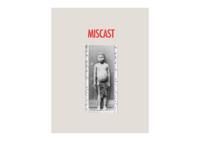
Miscast: Negotiating the presence of the Bushmen
In this book, eminent scholars explore the term 'Bushmen' and the relationships that gave rise to it, from the perspectives of anthropology, archaeology, comparative religion, literary studies, art history and musicology. Topics as diverse as trophy heads and museums, to the destruction of the Cape San, and appraisals of 19th-century photographic practices are examined. A parallel text runs thoroughout the book and provides a counter narrative to the central discourses. The book is richly illustrated with previously unpublished photographs and documents from many archives and museums.
-
Google Map of Indigenous Place Names
The map of indigenous place names located in the San tsî Khoen Digital Archive is duplicated on Google Maps in order to make the information more accessible.
-
San & Khoi Centre YouTube Channel
Critical video material generated by the San & Khoi Centre is duplicated on our YouTube Channel to provide alternative access to these resources.
-
Endangered Languages Digital Archive on archive.org
The Endangered Languages Digital Archive is maintained by the San and Khoi Unit at the University of Cape Town. The research unit is the result of a partnership between UCT, traditional San and Khoe leadership structures and non-governmental and civic organisations. The archive aims to be a central resource for all extant material related to San and Khoe languages (Khoe-Kwadi, Kx'a and Tuu language families). The open access publications found in the San tsî Khoen Digital Library is duplicated on archive.org to provide alternative access to these resources.
-
Decentralisation of Knowledge
This project ensures that there is more than one digital platform people can access the indigenous knowledge managed by the San & Khoi Centre. The aim of this project is to widen access to the knowledge and information housed on the various platforms and to decrease the possibility of gatekeeping information and knowledge hoarding.
-
Gabeba Baderoon
-

Lauren Grootboom
I am currently a master’s student in the UCT Political Studies faculty. My research interests are race and racial construction during the apartheid era and indigenous knowledge systems. Currently my work is around contextualising my space as a black woman growing up in township spaces and how people navigate systemic coloniality and structural violence.
-
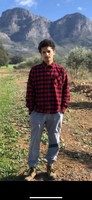
Alex Hendricks
Alex is a freelance filmmaker and producer, using film to address questions of identity and the political moment while contributing to popular and community education. Working with Non Profit organisations such as a Tshisimani centre for activist organisation and Fight inequality Alliance, his focus is on impact films that directly speak to the needs to communities in the Western Cape.
-
Lizanne Thornton
I am a born and bred Capetonian. Learning about the stories which shaped Cape Town, I understand and appreciate the uniqueness of the space I call home. After years of secular employment, several epiphanies resulted in me finally acquiescing to picking up my formal education by enrolling for a Bachelor of Arts degree at the University of Cape Town. My passion for language and culture studies led me to my current postgraduate research on Afrikaaps through a gendered lens. When I am not shackled to my desk or captivated by yet another arresting author, I enjoy walking the mountains, listening to Cape Jazz, and spending time with family and friends.
-

Joline Young
Joline Young is a historian, heritage consultant and published author who enjoys community engagement. Joline is trained in primary archival and oral history research. Past projects include research on farmworkers and farmers, indigenous communities and enslaved people. Joline obtained an MA in Historical Studies (Distinction) for her thesis on The Enslaved People of Simon's Town. She also conducts occasional historical tours in Simon's Town and Cape Town.
-
Digital Archive Development
The scope of the archival project includes: (i) showcasing the transition from the colonial to decolonial representation of indigenous knowledge by presenting the knowledge produced in the colonial paradigm alongside the knowledge produced within an indigenous perspective; and (ii) the use of mainstream tools to create an open access digital archive of indigenous knowledge and languages. The objectives of the project include: (a) The social integration of indigenous communities with integrity within the larger conceptualisation of knowledge; (b) To provide a platform to include the voices and perspectives of silenced and marginalised in traditional archival practises and knowledge production mechanisms; (c) To widen access to the knowledge produced for the archive through the employment of mobile and alternative technologies; and (d) To provide an example of a decolonial archive in practice.
-
Khoekhoegowab Teacher Training Internship
The internship offered has two components: (i) a four-week Khoekhoegowab proficiency training programme and (ii) gaining practical experience teaching a foundational Khoekhoegowab short course. The proficiency training programme builds on participants pre-existing language knowledge gained from attending the Introduction to Khoekhoegowab Foundational Course. The focal shift is from learning for self development to learning in order to support the language development of others. Once the course is completed interns teach two of the short courses under the supervision of the primary language instructor.
-
Community Review of the Archive
Members of the Nǀuu and Khoi communities are critical participants in the archive’s content development. To further ensure that the archive represents the knowledge and cultural interests of the communities, community review engagement processes of the site is undertaken after critical rounds of development. Participants included past students of the Foundational Khoekhoegowab language course offered by the San and Khoi Centre since 2019 and members of the A\Xarra Restorative Justice Forum. The ongoing community engagement process hopes to ensure that the content is critically engaged with and that descendant communities contribute to the knowledge production processes of the archive on their terms towards intellectual sovereignty to foster decolonisation.
-
Multilingual Dictionary: DSAC and African Tongue
This is a dictionary portal for the N|uu language with accompanying translations in Nama, Afrikaans and English. You can search for any of the included target words in N|uu, Nama, Afrikaans, or English. To assist with learning the pronunciation of the language, N|uu words are also transcribed into the International Phonetic Alphabet (IPA). Additionally, audio recordings from mother tongue speakers are provided as clear examples of how the language sounds. Sadilar hosts a digital version of the dictionary; see below link. Saasi Epsi is an app based on this digital dictionary; see below link.
-
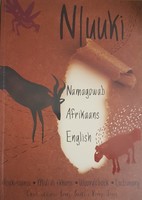
N|uuki, Namagowab, Afrikaans, English : ‡Xoaki‡xanisi, Mîdi di ‡Khanis, Woordeboek, Dictionary
This dictionary features two dialects of the N|uu language (Eastern and Western), as well as Nama, Afrikaans and South African English. This dictionary was not simply translated in standard varieties of Nama and Afrikaans, but was based on fieldwork conducted with speakers of these languages living in previously N|uu-speaking areas, i.e., South African Nama and 'Onse Afrikaans'. These languages and dialects show evidence of their influence on one another over time.
-
A word from the funder
Sophie introduces IFAS-Research as it contributes to scientific events in Africa and France. She contextualises Sarah Baartman's relationship with France with a commentary on how science and medicine contributed to racism. Women like Sarah Baartman were used to dehumanise the San & Khoi people through a scientific process. This process was depicted in the French 2010 movie "Black Venus".
-

The diverse family tree of the people in the Cape
Bradley presents the case of the Bali family. Their ancestry include shipwrecked slaves who integrated into the Nama community and the only trace of this legacy is the surname "Bali". Shared and diverse family trees of the people in the Cape are then discussed, with historical examples, highlighting the complex identity of the people who live in the Western Cape. Cousin connections between Xhosa, Europeans, people from Asia subcontinent, and the indigenous communities are explored to counter the skewed social narrative legacy of identity engineering in the Cape. Bradley shows examples of shared or diverse family trees outside of South Africa to demonstrate that this is a universal experience that needs to be further studied through a decolonial lens.
-

Event context: Indentured Interrupted
Tauriq Jenkins, the event MC provides some context on the event and its significance with regards to contributing to reframing identities disrupted to facilitate people's dislocation from the land. This process denies the historic intermingling of diverse communities of people at the Cape.
-
Women's role in knowledge and language development
Justin addresses the silences that can exist in archives and how the living reality of people, like Nadia van Dyck, challenge these silences. He emphasises the role of women in the transference and evolution of knowledge referencing the term "kombuis taal" which is a derogatory synonym for Kaaps and a study one of his students is undertaking researching the role of women in language development. In keeping with the theme of women's contribution to the knowledge development describes the work of Zimitri Erasmus that provides us with three tensions or lens that can be used to re-examine race relations.
-
The African Rock Art Digital Archive
The Rock Art Research Institute (RARI) has a substantial collection of historical documents, photographs, redrawings and slides in addition to its large working collection of slides, tracings and redrawings. Over time, many of the older slides started to change colour and deteriorate in quality, prompting a programme to preserve the historical documents, photographs and slides in RARI's possession and reduce their handling by researchers and visitors. Preservation was possible by digitising the collections and making them available on a database, thereby reducing physical handling while facilitating access to images and documents. The Ringing Rocks Foundation provided the necessary funding for this project and in January 2002 the Digital Laboratory was named in their honour. The laboratory had the daunting task of digitising all the existing archives at RARI as well as providing a database from which the archives could be accessed and viewed. Moreover, with the specification for the database being agreed upon, RARI hired a London-based company called System Simulation Ltd (SSL) to develop the much-needed software for the database. The Ringing Rocks Digital Laboratory started its digitisation process in August of 2002. During the course of digitisation, RARI realised that it could use the expertise and equipment it has access to through the Ringing Rocks project to record other important collections, both private and institutional. This vision culminated in the South African Rock Art Digital Archive (SARADA), a resource that includes collections owned by the Analysis of Rock Art of Lesotho (ARAL) project, Iziko Museums of Cape Town, Natal Museum, National Museum (Bloemfontein), University of Cape Town (UCT), the University of South Africa (UNISA), RARI and Janette Deacon (private collection). The scope of this project was funded by the Andrew W Mellon Foundation. With the end of the Ringing Rocks project in February of 2005, preparations were under way to start digitising the collections as part of the SARADA project. By August 2005, ARAL was being digitised. The goal of the Ringing Rocks Digital Laboratory and The African Rock Art Digital Archive (SARADA) is to digitise rock art collections on the African continent, make them available in an easily searchable database, in so doing conveying the importance of protecting and preserving the continent's rich archaeological heritage and facilitating ongoing research and interest in its fascinating past. Collections include slides, historical documents, tracings, redrawings, renderings, prints, sketches and photographs.
-
ǂKhomani San - Hugh Brody Archive
The ǂKhomani San are the first people of the southern Kalahari. They lived as hunters and gatherers in the immense desert in the northwest corner of South Africa. For them, it was a land rich in wildlife, plants, trees, great sand dunes and dry riverbeds. When the ǂKhomani San share their history, they tell a story of dispossession from their lands, erasure of their way of life, and disappearance of their language. To speak of their past is to search in memory for all that was taken from them in the colonial, apartheid and post-apartheid era. But they also tell a story of reclamation and recovery of lands, language and even of memory itself. They tell a story of struggle to emerge from the losses of the past, to put in place a new story. The collection presented here includes: photographs, posters and maps, trailers from the 'Tracks across Sand' documentary, and interview transcripts.
-

Ernst Westphal: San Languages
Westphal was Professor of African Languages at UCT between 1962 and 1984, and is best known for his contributions to the studies of non-Bantu click languages, lumped together under a misleading cover term ‘Khoisan’ by other scholars. The Westphal sound files are precious because they include recordings of some languages, which are no longer spoken and of which there is no written record. The collection presented here includes sound files and manuscripts.
-
!Xaus Lodge
-
Ambiguity is my middle name: A research diary
-
Thank you for making me strong: Sexuality, gender, and environmental spirituality
-
Back to our roots: Principles of uncertainty as applied to monitoring and evaluation for gender and climate change work
-
Khoelife
-
Thicker than Sorrow: A book launch
-
Reflections by Khadija Heeger: An interview
-
History of the San & Khoi Centre: An interview with June Bam-Hutchison
-
Ouma Katrina: Day 3 interview
-
Post presentation discussion: Status of teaching of African women history in African universities
-
Oral history of the Two Rivers
-
Making history, writing the present: The WCCR and Black Feminism at UCT
-
Supplementary Archival Project
-
The interment of Sarah Baartman
-
Social engineering the destruction of social hybridity in the Cape
-
Re-thinking Africa: Indigenous Women Re-interpret Southern Africa's Pasts: A book launch
-
Healing the past for the future: A survivor's view of the Damara/Herero/Nama genocide of 1904-1905
-
Jeanefer Visser-Stallenberg
-
Terneil Obermeyer
-
Pedro Dausab speaks Khoekhoegowab: Reflecting on his formative years and his educational journey
-
Medee Rall
-
A/Xarra Women's Commission
-
Forty (40) Training Workshops
-
!Gâ re – Rangatiratanga – Dadirri : Decolonizing the ‘capture of knowledge': 2019 - 2022
-
Decolonisation of Knowledge Production in Comparative Perspective (South Africa and Brazil): Dialogical Archives Seminar Series
-
Affiliated Project Work
-
Restoring African Feminist Indigenous Knowledge in the Southern African Human Languages Technologies project: An action research case study of the San tsî Khoen Digital Archive 2020-2022
-
Chief Francisco McKenzie
-
Miscast: Negotiating the presence of the Bushmen
-
Google Map of Indigenous Place Names
-
San & Khoi Centre YouTube Channel
-
Endangered Languages Digital Archive on archive.org
-
Decentralisation of Knowledge
-
Gabeba Baderoon
-
Lauren Grootboom
-
Alex Hendricks
-
Lizanne Thornton
-
Joline Young
-
Digital Archive Development
-
Khoekhoegowab Teacher Training Internship
-
Community Review of the Archive
-
Multilingual Dictionary: DSAC and African Tongue
-
N|uuki, Namagowab, Afrikaans, English : ‡Xoaki‡xanisi, Mîdi di ‡Khanis, Woordeboek, Dictionary
-
A word from the funder
-
The diverse family tree of the people in the Cape
-
Event context: Indentured Interrupted
-
Women's role in knowledge and language development
-
The African Rock Art Digital Archive
-
ǂKhomani San - Hugh Brody Archive
-
Ernst Westphal: San Languages
